






Questions & Answers
Answered by real pet keeping experience.
Q How big is it, and what size tank does it suit?
Q Will my fish actually use it, or is it just decoration?
Q Can I use it in a reptile enclosure too?
Q Will it look natural, or like an obvious plastic ornament?
Q How do I build a full Jurassic scene around it?
Q How do I prep it before adding it to my tank?
Generated by Wild AI
Try it now — ask more questions
Product details
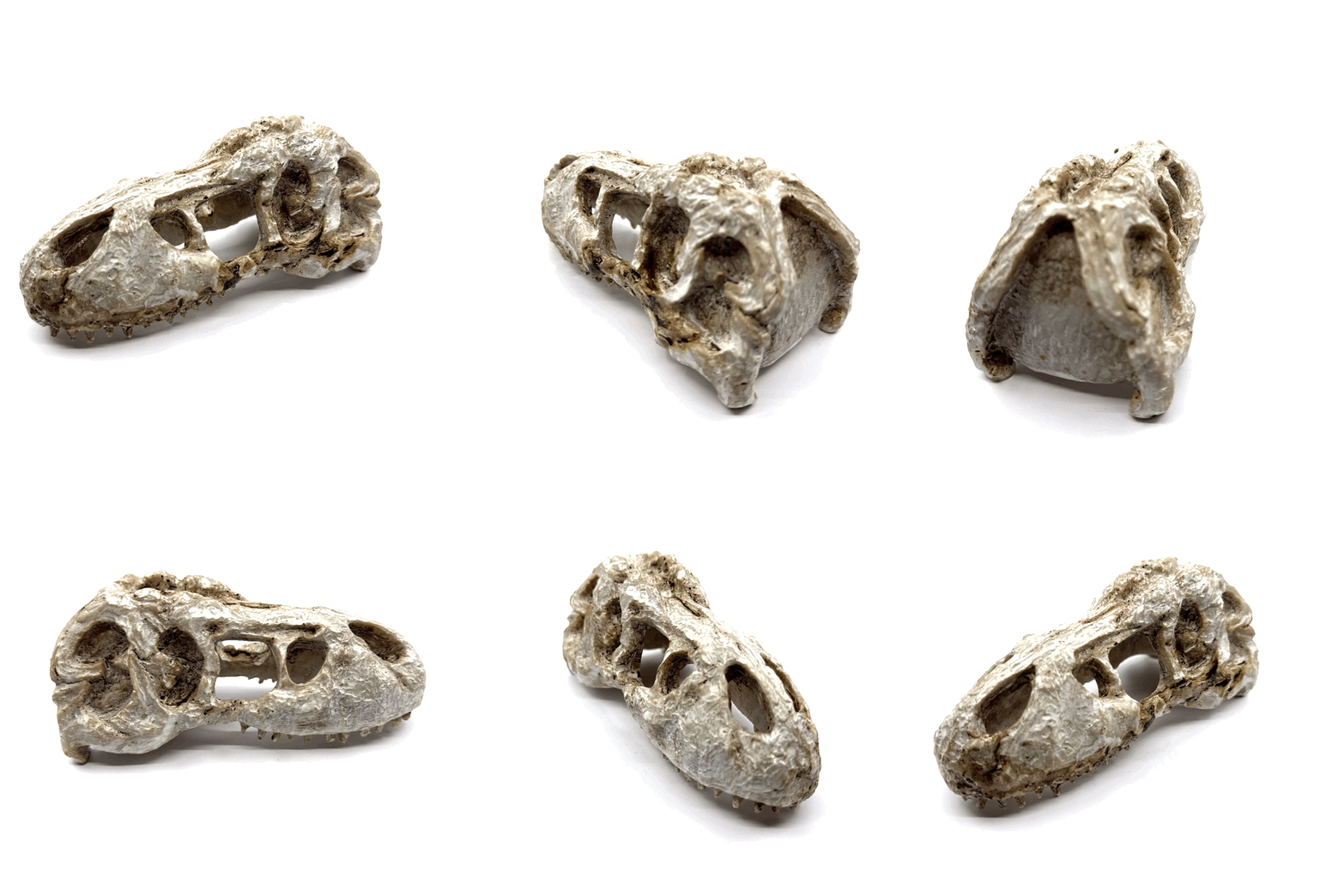
At 5.7 inches this is a true centerpiece piece — large enough to anchor an entire tank around it. The hollow interior and open jaw create a proper cave that medium fish will actually claim and use. Plecos, bettas, and cichlids are drawn to enclosed spaces like this, and many keepers report their fish spending most of their time in and around it once placed. In a reptile enclosure it gives geckos, anoles, and small lizards a shaded shelter with good airflow. The weathered fossil texture looks natural once it settles into substrate, especially with sand or fine gravel packed around the base.
The size of this piece makes it easy to build a full scene around it. Dark sand, smooth river stones, a few pieces of driftwood, and some java fern or artificial plants turn it into a complete Jurassic aquascape with very little effort. It is one of the most popular starting points for themed tanks — especially for kids who want their first setup to feel like something out of a movie. Works as a solo statement piece in smaller tanks or as the main feature in a 20 to 55 gallon build.

Safe for freshwater and saltwater aquariums and reptile enclosures of all types. Rinse thoroughly before placing. Soak in dechlorinated water for 30 minutes before adding to an established tank if you want to be cautious. Remove and scrub with a soft brush to clear algae from inside the cavity as needed. Compatible with sand, gravel, and all standard bioactive substrate mixes.


