






Questions & Answers
Answered by real pet keeping experience.
Q How do I feed it, and how often?
Q What's in it, and why those ingredients?
Q Do hermit crabs really need more than their regular pellet food?
Q Will this help my crab molt successfully?
Q My hermit crab seems boring or inactive — will this change that?
Q What crabs can eat it, and at what age?
Generated by Wild AI
Try it now — ask more questions
Product details

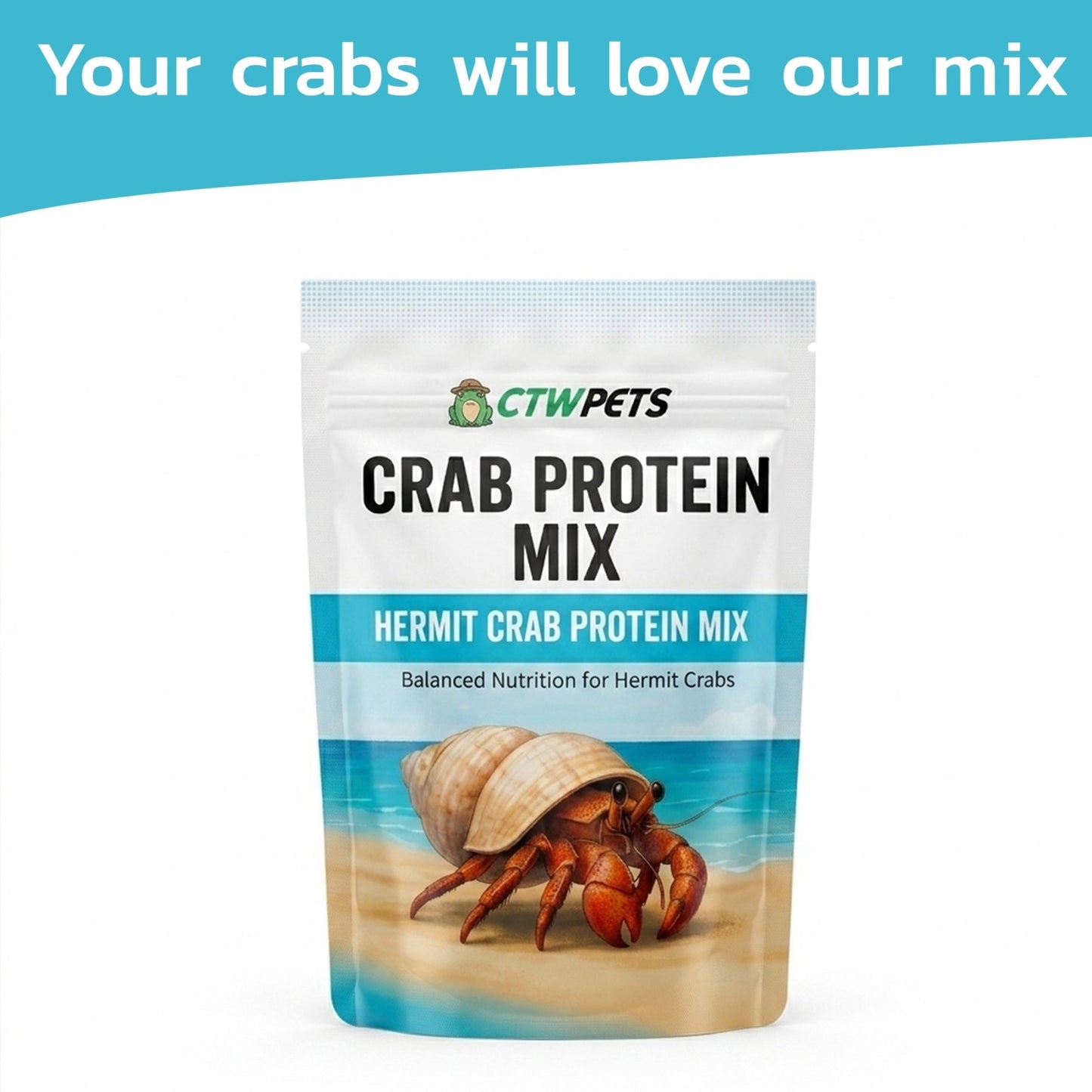
The blend combines dried crickets, silkworm pupae, black soldier fly larvae, mealworms, organic green split peas, banana chips, and pollen into a single mix that covers protein, healthy fats, fiber, and natural sugars in one feeding. Each ingredient serves a specific purpose — insect proteins support muscle development and exoskeleton strength, split peas add plant-based fiber for digestion, banana chips provide natural energy and potassium, and pollen rounds out the micronutrient content. Sprinkle a small pinch directly over their regular food or place it separately as a standalone snack. Hermit crabs are natural foragers and will pick through the mix and select what they want, which keeps feeding time engaging and active.
Hermit crabs are one of the most commonly underfed pets in the hobby. Most keepers rely on a single commercial pellet food without realizing that hermit crabs in the wild eat an enormous variety of organic material including insects, fruit, leaves, and decaying matter. A protein-rich supplement like this given a few times per week makes a noticeable difference in activity levels, molting success, and overall condition over time. Crabs that are well-nourished before a molt tend to come out of it more successfully and recover faster than those running on a limited diet.
Feed two to three times per week as a supplement alongside a varied base diet. Offer a small pinch per crab and remove anything uneaten within 24 hours to keep the enclosure clean. Store in a cool dry place with the lid sealed between feedings. Suitable for all land hermit crab species including purple pinchers and Ecuadorian crabs at any life stage.


