





Clean Up Crew Bites – Bioactive Food 2.5oz
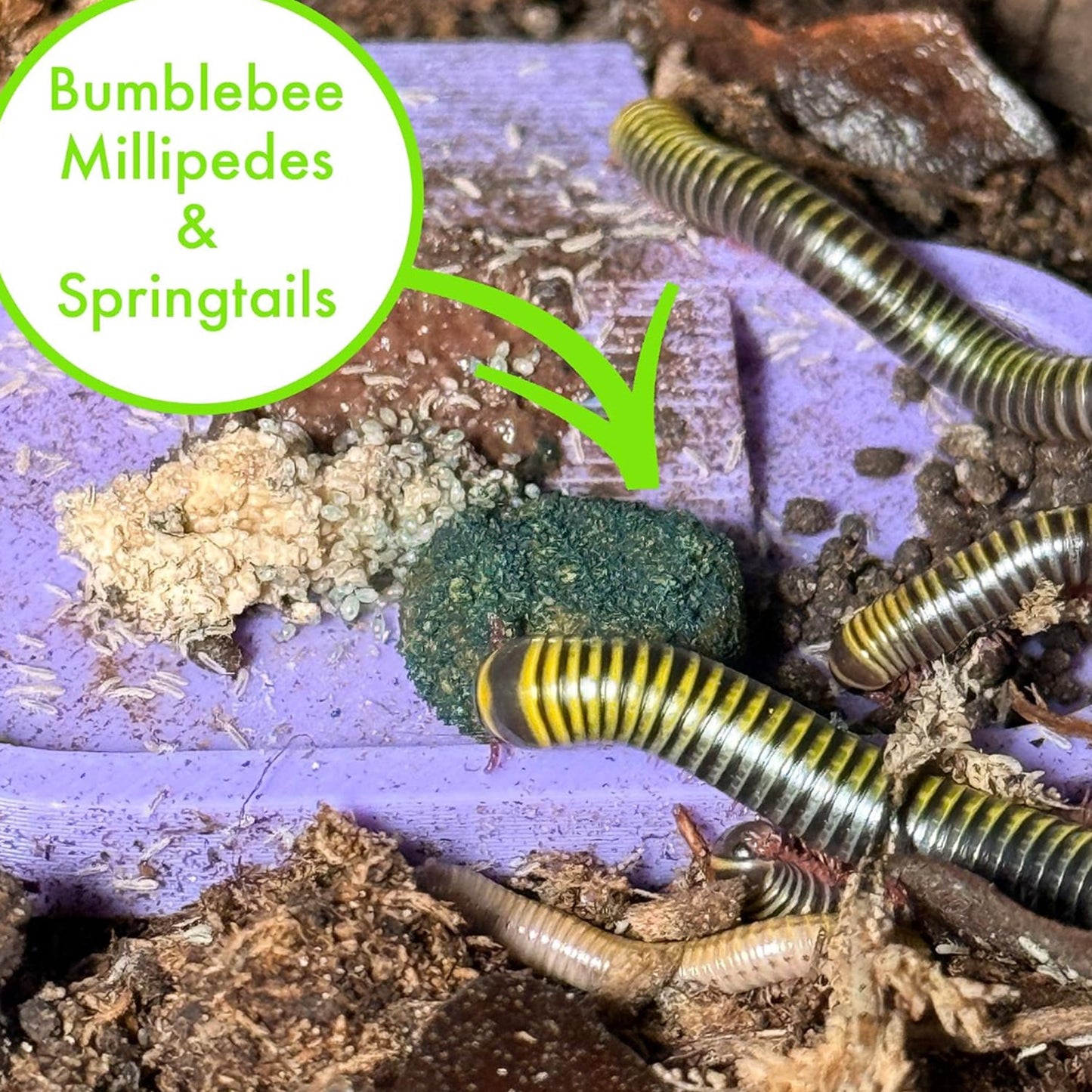
Feeds isopods, springtails, millipedes, and fruit flies.
Blogs & Videos About This Product

Why Your Bioactive Enclosure Is Failing — And How Feeding Your Cleanup Crew Fixes It
Jul 18, 2026
Read more →



Questions & Answers
Answered by real pet keeping experience.
Q How do I feed it, and how often?
Q Which cleanup crew critters is this for?
Q Do I really need a dedicated food — won't the crew just eat waste in the enclosure?
Q My bioactive setup isn't keeping itself clean anymore — what's going wrong?
Q Why not just use fish flakes or leftover produce to feed my isopods?
Q How long does the 2.5oz bag last?
Generated by Wild AI
Try it now — ask more questions
Product details
Sprinkle a small amount directly onto the substrate or into a feeding dish and your cleanup crew will find it and get to work. The formula is designed to give isopods, springtails, millipedes, and fruit flies a consistent and nutritious food source so they stay active, reproduce, and continue doing their job throughout the enclosure rather than dying back when organic matter in the substrate runs low. A well-fed cleanup crew moves faster, breeds more consistently, and processes waste more effectively than one that is left to survive on whatever the enclosure produces on its own. The 2.5oz bag provides enough food to support an established colony for several weeks at a regular feeding schedule.
Bioactive enclosures work because of the microfauna living inside them — isopods and springtails break down waste, control mold, and cycle nutrients back into the substrate in a way that keeps the enclosure stable without constant deep cleans. Most keepers who struggle with bioactive setups are not failing because of the substrate or the drainage layer — they are failing because the cleanup crew is not being fed consistently enough to maintain a viable population. A crashing isopod colony is the most common reason a bioactive enclosure stops functioning the way it should, and it almost always comes down to food availability.
Feed two to three times per week depending on colony size and enclosure activity. Start with a small pinch and increase based on how quickly it disappears — if food sits uneaten for more than 48 hours, reduce the amount per feeding. Store in a cool dry place with the bag sealed between uses. Suitable for all isopod species, springtail cultures, millipedes, and fruit fly colonies. Compatible with tropical, temperate, arid, and bioactive enclosures of all types.


