





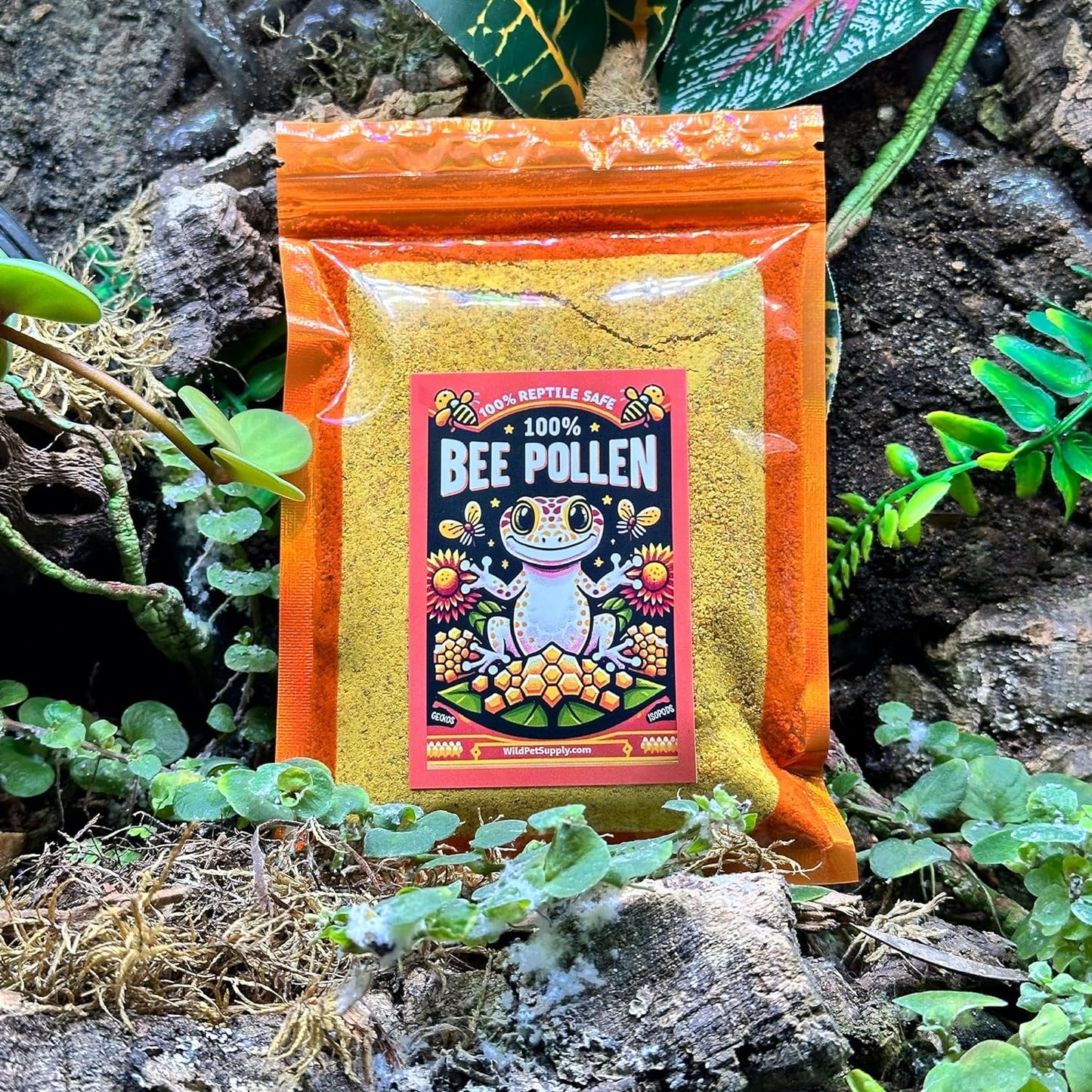
Bee Pollen Powder – Reptile Supplement 3oz
A pure pollen powder that boosts appetite and nutrient intake.
Blogs & Videos About This Product

Boost Your Reptile’s Health Naturally: The Benefits of Bee Pollen (Why CTWPets Bee Pollen Is a Great Option)
Sep 30, 2025
Read more →


Questions & Answers
Answered by real pet keeping experience.
Q How do I use it, and how much?
Q My reptile has gotten picky — will this actually get it eating again?
Q Is it just for appetite, or does it add nutrition too?
Q Can I use it to help a reptile coming out of brumation?
Q What species can have it?
Q How is this different from the 1oz bag — is the bigger size worth it?
Generated by Wild AI
Try it now — ask more questions
Product details
Sprinkle a small amount directly over greens, fruit, feeder insects, or any base diet and most reptiles will eat food they would otherwise ignore. Bee pollen has a naturally sweet, floral smell that is extremely attractive to herbivorous and omnivorous reptiles, which makes it one of the most effective appetite stimulants available for picky eaters without introducing anything artificial into the diet. The 3oz bag is more than double the previous 1oz size and comes in a resealable pouch with a free measuring scoop included so portioning stays consistent and the powder stays fresh between uses. A small amount goes a long way — a light dusting over a salad or a pinch mixed into a gecko diet is all that is needed to get the effect.
Bee pollen is one of the most nutrient-dense natural foods available for reptile supplementation. It contains a broad spectrum of vitamins, minerals, amino acids, and enzymes that support energy levels, immune function, and healthy digestion in a way that most single-ingredient supplements do not. For keepers dealing with a reptile that has become selective about its food — a common issue with bearded dragons and tortoises who go through appetite fluctuations seasonally — bee pollen dusted over a refused salad will often get them eating again within the same feeding. It is also a useful tool during brumation recovery when an animal is coming back to appetite slowly and needs an extra incentive to start eating consistently again.
Feed two to three times per week as a supplement rather than a daily staple. A light dusting is sufficient — no need to coat the food heavily. Store in a cool dry place with the resealable pouch sealed between uses to preserve potency. Suitable for bearded dragons, tortoises, crested geckos, leopard geckos, blue-tongued skinks, iguanas, and most other herbivorous and omnivorous reptile species.


