View all CTWPets →

Shrimp Dome Hide – Natural Breeding Cave

A porous dome shelter for neocaridina and caridina colonies.

Color: Black
$6.59 USD
$6.59 USD
Sale Sold out
Shipping calculated at checkout.
🐠 Aquarium
  • The porous surface grows moss naturally over time — giving baby shrimp a source of biofilm and cover inside the dome from the moment they hatch.

  • Low curved opening lets shrimp move in and out freely while keeping most fish out — sized for neocaridina, caridina, and all dwarf shrimp species.

Ships from Wisconsin, USA Shrimp Safe Made in the US
🔥 400+ bought in past month
View full details
Wild AI

Questions & Answers

Answered by real pet keeping experience.

Q How is this different from a regular smooth resin hide?
The porous surface is what sets it apart. Moss attaches and grows across it naturally over time, and once covered it becomes a living shelter — providing both cover and a constant source of biofilm that baby shrimp can graze on directly inside the dome. A smooth resin hide is just shelter; this one doubles as a food surface right where the smallest shrimp are hiding.
Q Will it actually help my shrimp breed and raise more shrimplets?
This is where it earns its place. Berried females retreat into the dome during the final stages of carrying eggs and stay through the early post-hatch period, giving the smallest, most vulnerable shrimp a protected space before they're large enough to compete with adults for food and space. Since shrimplet survival in the first few weeks is what determines whether a colony actually grows, a hide that shelters and feeds them at once is one of the more meaningful additions to a breeding tank.
Q How many should I put in my tank?
Experienced shrimp keepers typically run three to five hides per tank depending on colony size, so every animal has somewhere to go during molting and post-molt recovery. The dome is compact enough to add several across the floor of a standard shrimp tank without crowding the layout — more shelter options spread around the substrate means more active, visible, and reproductive behavior than a tank where shrimp are constantly exposed.
Q Do I have to add moss, or will it grow on its own?
Either works. The porous surface will pick up moss and biofilm naturally over time under normal tank conditions, but if you want faster coverage you can attach moss manually with fishing line or super glue gel. However you go about it, the end result is the same living, grazable shelter — the manual route just gets you there quicker.
Q Will it blend into a planted or aquascaped tank?
Yes. Positioned near a moss cluster or plant grouping, the dome disappears into the environment completely, especially once it's grown its own moss layer. It reads as a natural feature rather than a decoration sitting on the substrate, which keeps an aquascaped tank looking clean and intentional.
Q Which species can use it, and does it fit my setup?
It's safe for all freshwater dwarf shrimp — cherry, neocaridina, and caridina varieties — plus snails and small nano fish. It works on gravel, sand, and planted substrates, and it's compatible with all standard freshwater conditioners and planted-tank fertilizers. Rinse it before placing and it's ready to go.
Wild AI Generated by Wild AI Try it now — ask more questions

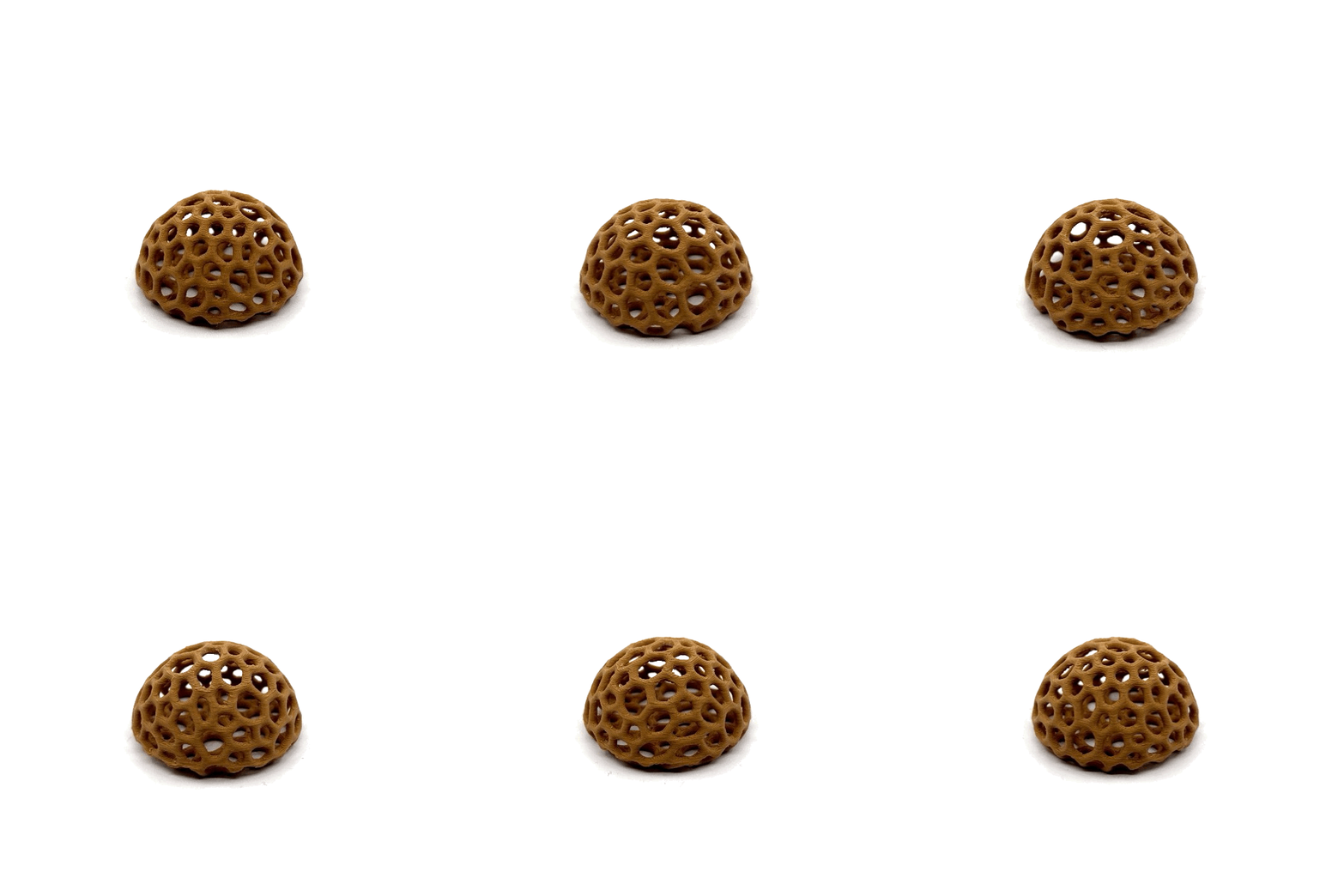
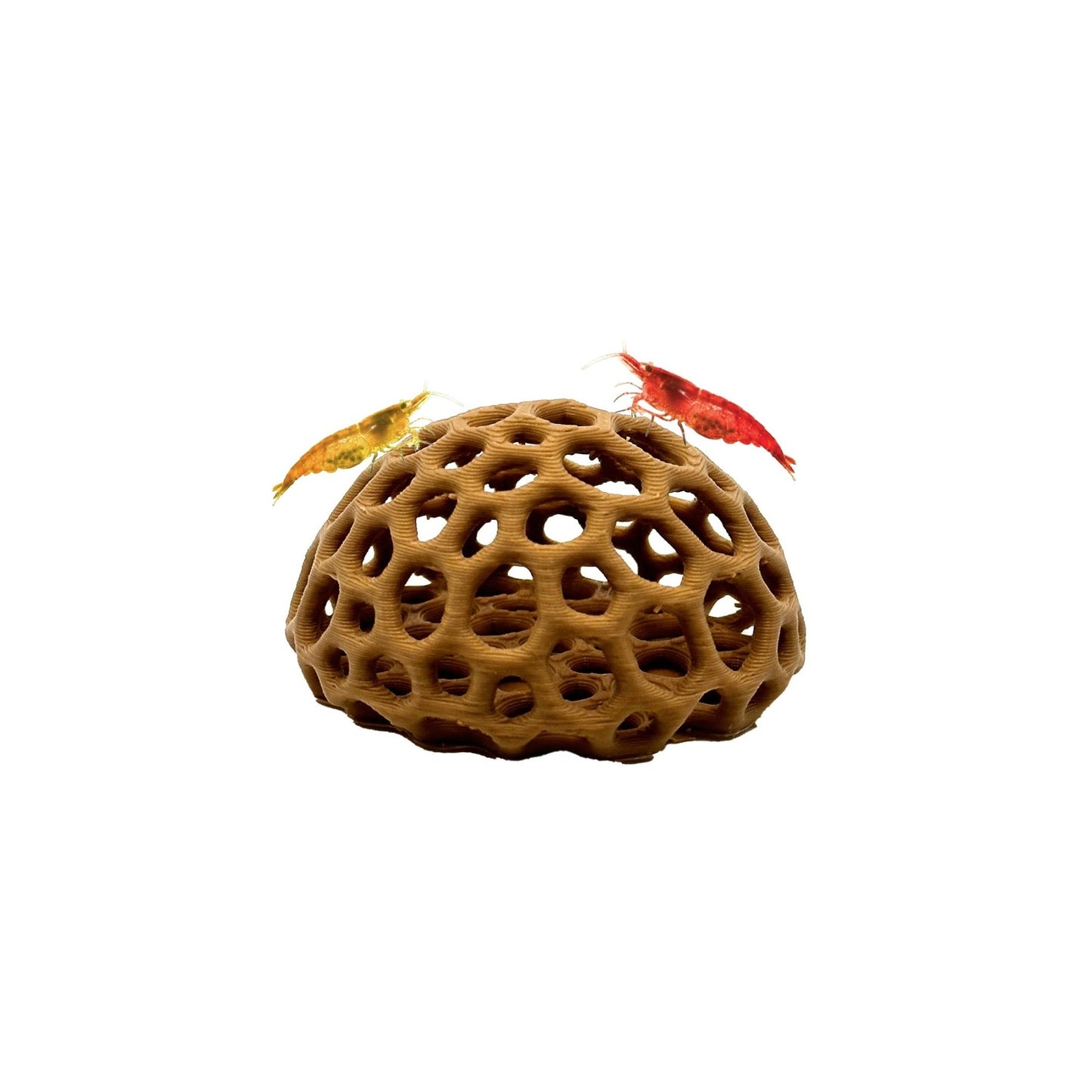
The dome sits low on the substrate with a curved opening that shrimp can move through freely in any direction while still feeling enclosed and protected inside. The porous surface is what sets it apart from smooth resin hides — moss attaches and grows across it naturally over time, and once covered it becomes a living shelter that provides both cover and a constant source of biofilm for baby shrimp to graze on directly inside the dome. This is one of the more meaningful differences for a breeding tank where shrimplet survival in the first few weeks determines whether the colony actually grows. Berried females will retreat into the dome during the final stages of carrying eggs and stay there through the early post-hatch period, which gives the smallest and most vulnerable shrimp in the colony a protected space before they are large enough to compete with adults for food and space elsewhere in the tank.

Colony health in a shrimp tank is largely a product of how secure the shrimp feel in their environment. A tank with plenty of shelter options spread across the substrate produces more active, visible, and reproductive behavior than one where shrimp are constantly exposed with nowhere to retreat. The dome is compact enough to add several across the floor of a standard shrimp tank without crowding the layout, and positioned near a moss cluster or plant grouping it disappears into the environment completely. Experienced shrimp keepers typically run three to five hides per tank depending on colony size to make sure every animal has somewhere to go during molting and post-molt recovery.

Lush Dome - Live Aquarium Plant Dome | Subwassertang Shrimp Hide - Wild Pet Supply

Rinse before placing in the tank. Moss can be attached manually to the surface using fishing line or super glue gel to speed up coverage if preferred. Works on gravel, sand, and planted tank substrates. Safe for all freshwater dwarf shrimp species including cherry shrimp, neocaridina, and caridina varieties. Also suitable for snails and small nano fish. Compatible with all standard freshwater water conditioners and planted tank fertilizers.