
View all AquaBoost →

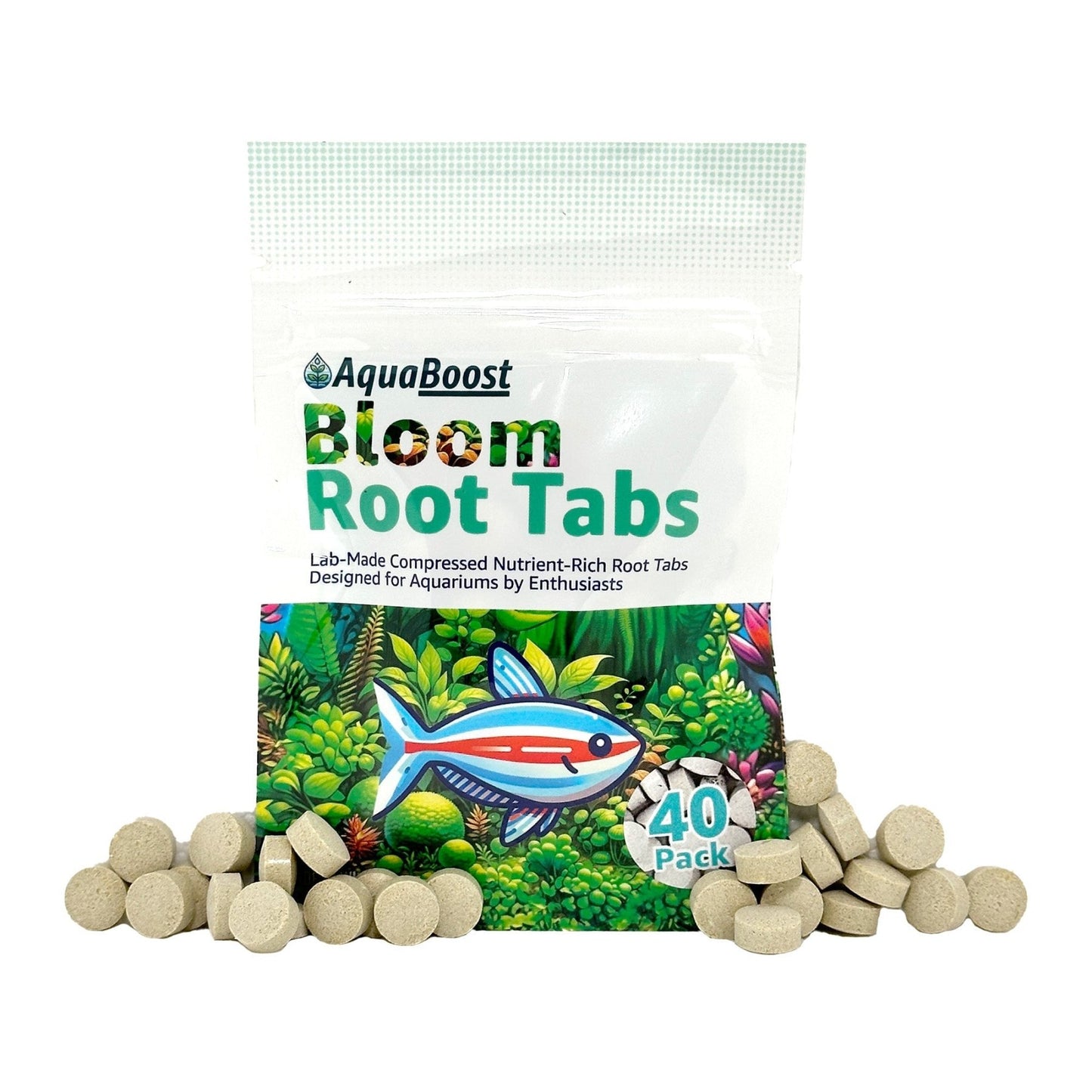
Bloom Root Tabs – Plant Supplement

Pressed nutrient tablets that sink and feed roots directly.

Pack: 10 Pack
$9.99 USD
$9.99 USD
Sale Sold out
Shipping calculated at checkout.
🐠 Aquarium
  • Compressed under 20 kilonewtons of force per tablet — they sink immediately and stay in the substrate instead of floating or dissolving on contact.

  • Delivers nitrogen, phosphorus, and potassium directly to the root zone — effective for crypts, swords, bulb plants, and carpeting species.

Ships from Wisconsin, USA Made in the US Fast Sinking Shrimp Safe
🔥 50+ bought in past month
View full details
Wild AI

Questions & Answers

Answered by real pet keeping experience.

Q How do I use them, and how often?
Push one tab two to three inches into the substrate near the plant's root base. Start with one tab per plant for crypts and swords, or place tabs every few inches across carpeting-plant areas. Reapply every four to six weeks, or whenever growth starts to slow — that's usually the substrate telling you it's time for a fresh tab.
Q Which plants actually need root tabs?
Rooted, substrate-feeding species — crypts, sword plants, bulb plants, carpeting plants, and any other plant that pulls its nutrients through the roots rather than the leaves. These are the plants where dosing the water column does very little, because amazon swords and cryptocorynes take the majority of their nutrition from the root zone. Stem plants, mosses, and floating plants feed through the water instead, so those lean on a liquid fertilizer like Bloom rather than tabs.
Q My swords and crypts aren't growing well — will these help?
Usually, yes — and slow, pale root feeders are the classic sign they're not getting substrate nutrition. Root tabs placed directly beneath these plants produce noticeably faster growth, stronger root structure, and deeper leaf color compared to the same plants in unfertilized substrate, typically within two to four weeks of the first application. If your liquid dosing hasn't moved the needle on heavy root feeders, this is why.
Q Won't these fall apart or float away before they reach the substrate?
No. Unlike gel caps that float or break apart on the way down, each tab is compressed under more than 20 kilonewtons of force, so it's dense enough to sink immediately and hold together in the substrate for weeks of slow release. That density is also what makes them cost-effective — one correctly placed tab lasts far longer than the equivalent volume of liquid fertilizer dosed weekly.
Q Are they safe for my shrimp and snails?
Yes. They're safe for all freshwater fish, shrimp, and invertebrates, and because the nutrients release down into the root zone rather than into the water column, they stay where the plants use them. They work in gravel, sand, and soil-based substrates — freshwater use only.
Q Do I still need a liquid fertilizer if I use these?
For a mixed planted tank, usually yes — the two do different jobs. Root tabs feed heavy root feeders like swords and crypts down in the substrate, while a water-column fertilizer like Bloom feeds stem plants, mosses, and floating plants that take nutrients through their leaves. Pairing them covers both feeding paths, which is why most planted tanks run root tabs and a liquid together rather than choosing one.
Wild AI Generated by Wild AI Try it now — ask more questions

Push one tab into the substrate near the base of a plant and it begins releasing nitrogen, phosphorus, and potassium directly into the root zone where planted aquarium species actually absorb nutrients. Unlike gel caps that float or break apart on the way down, these are compressed under more than 20 kilonewtons of force per tablet, which means they are dense enough to sink immediately and hold together in the substrate for weeks of slow nutrient release. Effective for crypts, sword plants, bulb plants, carpeting plants, and any other rooted species that relies on substrate nutrition rather than water column feeding. The resealable zipper bag keeps unused tabs dry and fresh between uses, which matters in a fish room environment where humidity breaks down standard packaging quickly.

Bloom Root Tabs – Plant Supplement - Wild Pet Supply

Root feeders are one of the most misunderstood categories in planted tank keeping. Dosing liquid fertilizers into the water column does very little for plants like amazon swords and cryptocorynes that pull the majority of their nutrients through their root system rather than their leaves. Root tabs placed directly beneath these plants produce noticeably faster growth, stronger root structure, and deeper leaf color compared to the same plants in an unfertilized substrate, usually within two to four weeks of the first application. They are also one of the most cost-effective ways to maintain a planted tank because a single tab placed correctly lasts far longer than the equivalent volume of liquid fertilizer dosed weekly.

Bloom All-in-One Liquid Plant Fertilizer - Wild Pet Supply

Push one tab two to three inches into the substrate near the plant's root base. Start with one tab per plant for crypts and swords, or place tabs every few inches across carpeting plant areas. Reapply every four to six weeks or when growth begins to slow. Safe for all freshwater fish, shrimp, and invertebrates. Works in gravel, sand, and soil-based substrates. Freshwater use only.