View all CTWPets →

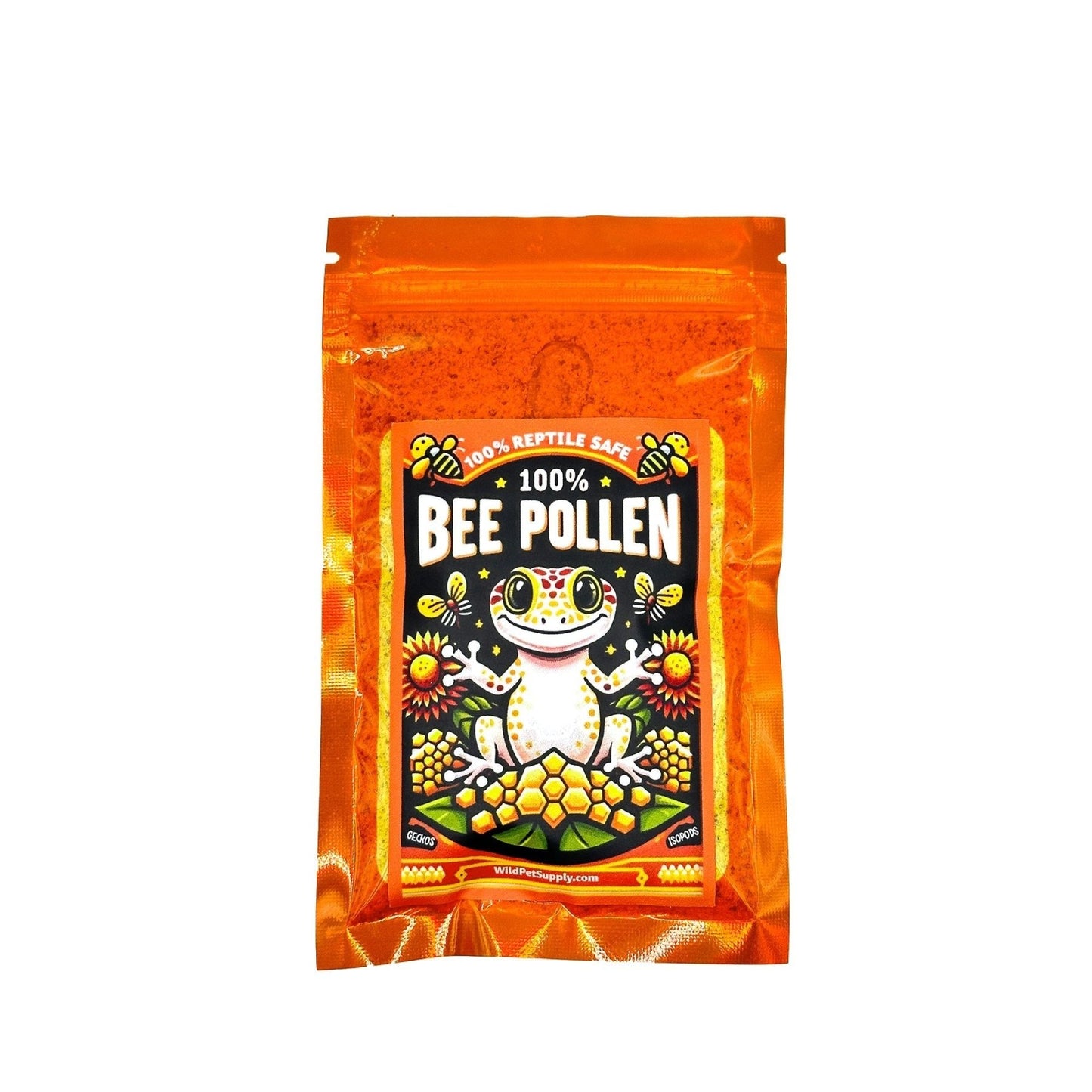
100% Bee Pollen Powder - Reptile Food Topper 1oz

A natural flavor boost for geckos, skinks, dragons, and more.

$8.79 USD
$8.79 USD $10.95 USD
Deal Sold out
Free Shipping $35+ | Flat Rate $4.50 Under
🔥 400+ bought in past month
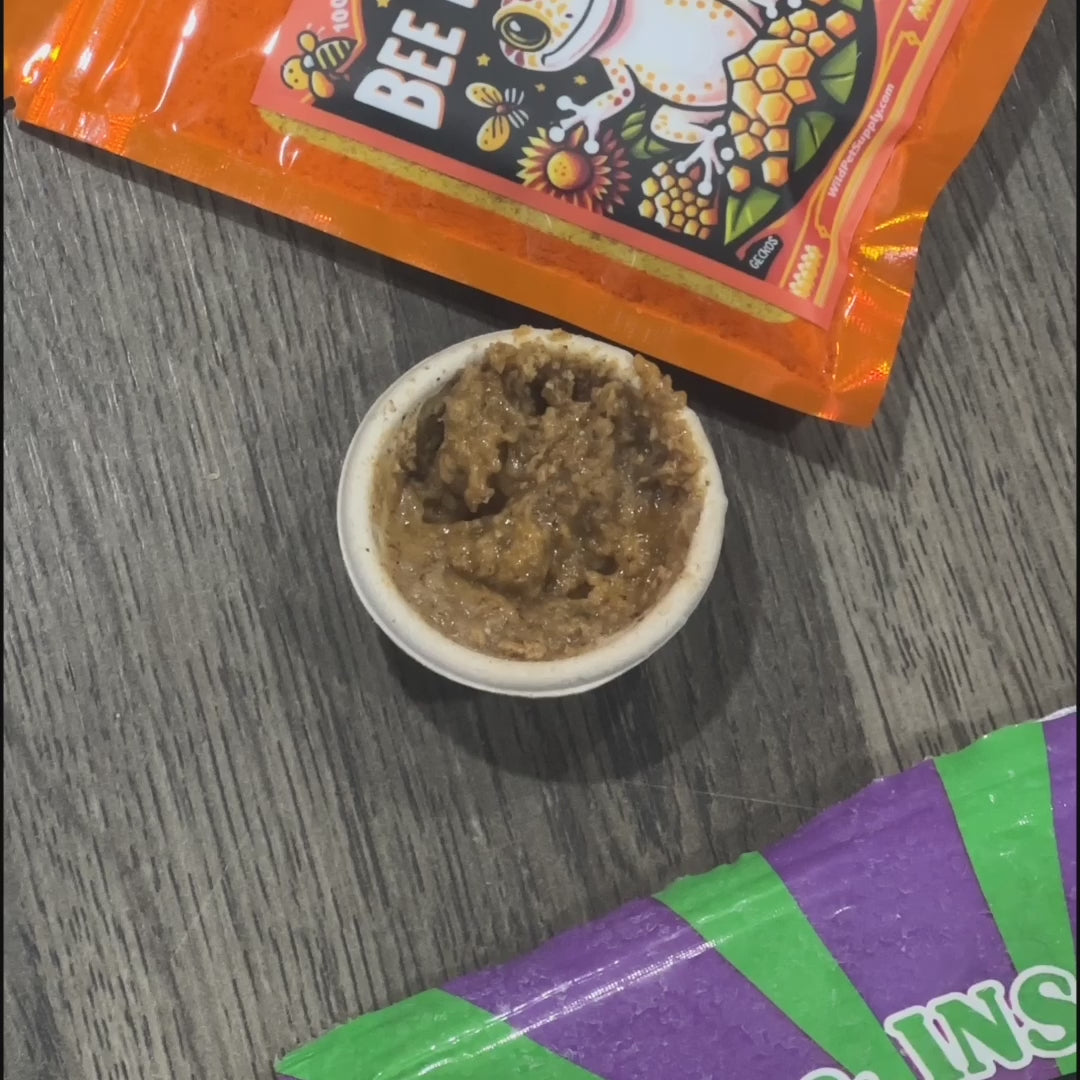
  • Sprinkle over insects, mix into gecko diet, or dust onto greens — the natural scent encourages most reptiles to eat food they normally refuse.

  • A versatile topper for crested geckos, bearded dragons, skinks, and chameleons — comes in a resealable 1oz bag to stay fresh between feedings.

🦎Terrarium Ships from Wisconsin, USA Treat Natural Ingredients No Fillers Resealable Bag Includes Scoop
View full details
Wild AI

Questions & Answers

Answered by real pet keeping experience.

Q What are customers saying about it?
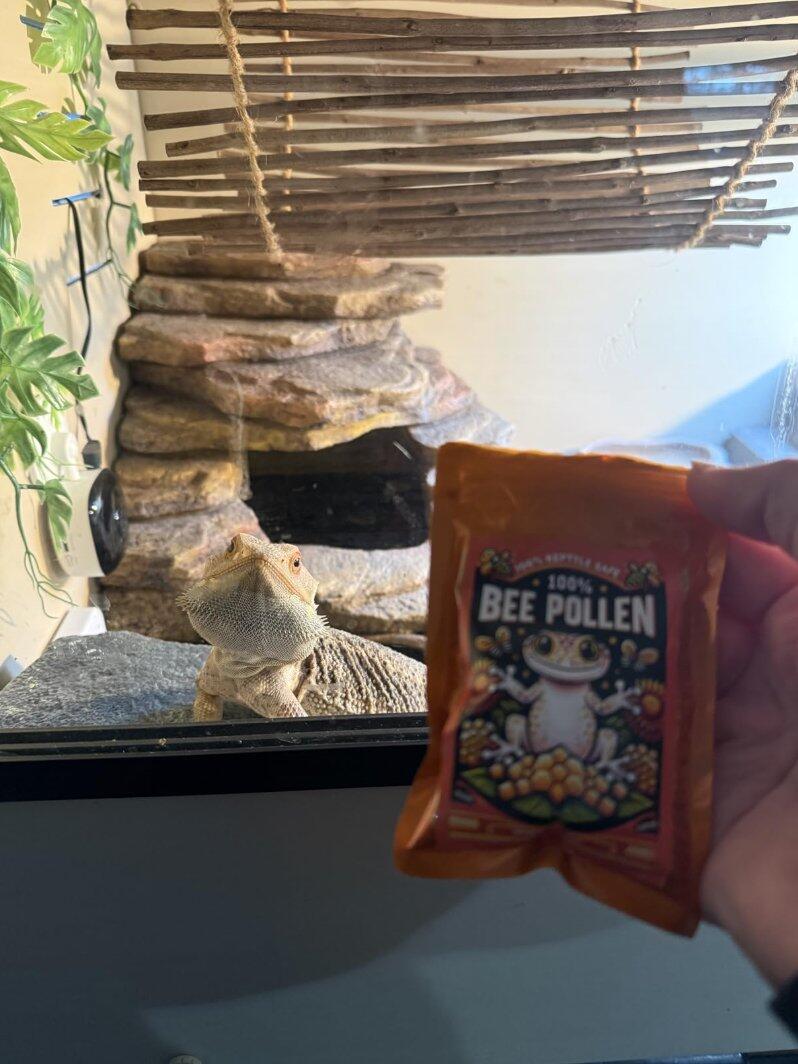
The through-line is that most reptiles take to it readily — crested geckos licking it straight off their food, and keepers dusting crickets with it for beardies, chameleons, and skinks who then eat the whole feeder. People call out the fair price (a few note it's cheaper than Amazon on the site), fast shipping, and that it doubles for gut-loading feeder insects and even isopods. One keeper mentioned their vet stocks it, which says something. The honest caveat worth knowing: one leopard gecko keeper found their gecko wouldn't lick it on its own from a bowl, but still ate crickets dusted with it — which is the useful takeaway. If your reptile won't take it straight, dusting feeders is the reliable route, and that's how most people use it anyway. On value, one reviewer clocked the 1oz bag lasting about a month of daily feedings, so a little genuinely goes a long way.
Q My reptile is a picky eater — will this actually get it to eat?
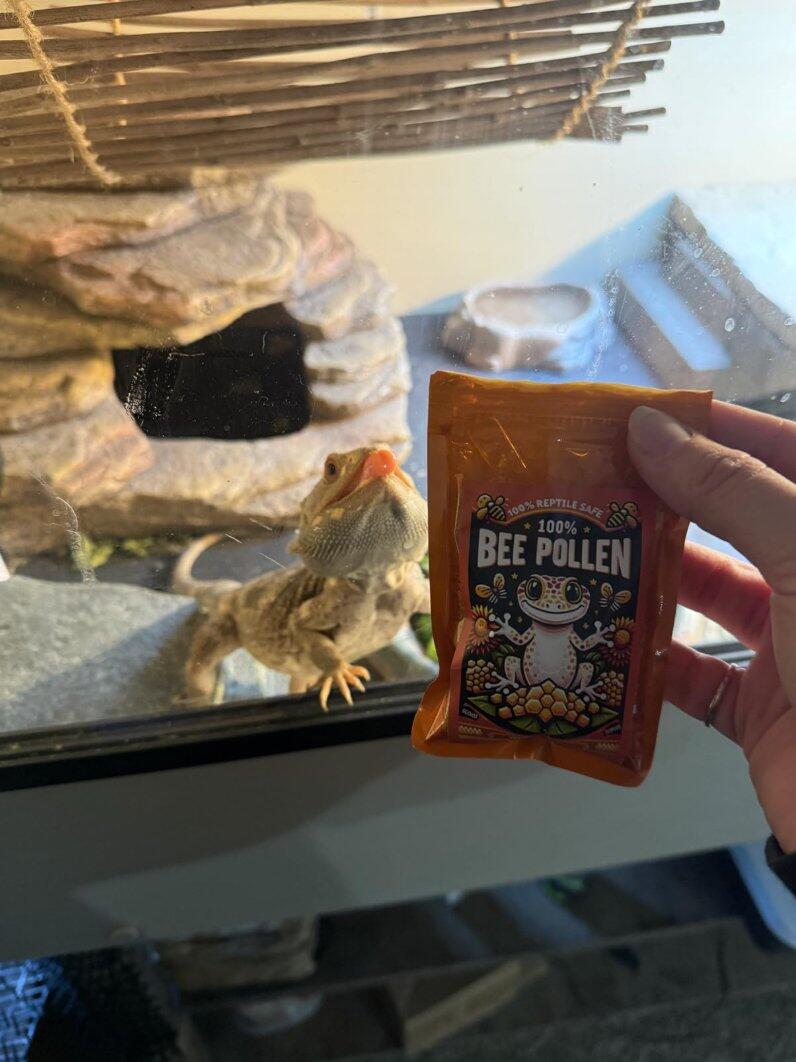
For most reptiles, yes — that's the whole reason to keep it on the shelf. The sweet, floral scent is usually enough to get an animal interested in food it's been picking around, which makes it a go-to during a seasonal appetite drop, post-shed recovery, or a diet switch. Real-world caveat from other keepers: a few animals won't lick it plain but will happily eat feeders dusted with it, so if the direct approach gets a shrug, dust the crickets — that reliably works even on the holdouts.
Q How do I use it, and how much?
Three ways, and you can pick whatever your animal responds to: dust it onto feeder insects, stir a few granules into crested gecko diet, or sprinkle a pinch over greens. Feed two to three times a week — a light dusting is all you need, and more isn't more effective, it just burns through the bag faster. Fed conservatively, keepers report a 1oz bag lasting roughly a month of daily use, so treat it as a light seasoning, not a scoop.
Q Is it just for appetite, or does it add real nutrition?
Both, and that's what separates it from a plain flavor lure. Beyond the scent that gets reluctant eaters going, bee pollen carries a broad mix of vitamins, amino acids, and micronutrients that complement almost any base diet — without adding anything artificial or processed. So when you dust a cricket with it, you're both making the feeder more tempting and boosting what that feeder delivers, which is exactly why keepers also use it to gut-load feeders before offering them.
Q Is it really 100% bee pollen with nothing added?
Yes — it's pure bee pollen, nothing artificial, processed, or filled in, which is right there in the name and worth confirming since buyers scan for it. That purity is what lets it layer onto whatever diet your animal's already on without changing the nutrition you've built around it, and it's why the natural scent is strong enough to do the appetite work on its own rather than relying on additives.
Q What species can have it — and can I gut-load feeders with it?
A wide range: crested geckos, bearded dragons, blue tongue skinks, chameleons, leopard geckos, New Caledonia geckos, and most other herbivorous and omnivorous reptiles. It also works as a topper for isopod colonies. And yes — keepers regularly use it to gut-load crickets and roaches before feeding, so the same bag pulls double duty as a dust, a food mix-in, and a feeder-loading supplement across a mixed collection.
Wild AI Generated by Wild AI Try it now — ask more questions

Product details

Sprinkle a small amount over mealworms, dust it onto feeder insects, stir a few granules into crested gecko diet, or add a pinch directly to chameleon food. The natural floral scent attracts most reptiles immediately and encourages them to eat food they would otherwise pick around or ignore entirely. Works across a wide range of species — crested geckos, bearded dragons, blue tongue skinks, chameleons, and New Caledonia geckos all respond well to it, and it doubles as a food topper for isopod colonies. The 1oz bag is a practical starting size for a single animal or for keepers who want to try it before committing to a larger quantity. Comes in a resealable bag to keep the powder fresh between uses.

Picky eating is one of the most common frustrations in reptile keeping and bee pollen is consistently one of the most effective natural solutions for it. The smell alone is enough to get most reptiles interested in food they have previously refused, which makes it especially useful during seasonal appetite drops, post-shed recovery, or when transitioning an animal onto a new diet. Beyond appetite stimulation, bee pollen contains a broad mix of vitamins, amino acids, and micronutrients that complement almost any base diet without adding anything artificial or processed to the feeding routine.

Feed two to three times per week as a supplement. A light dusting or a few granules is all that is needed per feeding — more is not more effective and the bag will last significantly longer with conservative use. Store in a cool dry place with the resealable bag sealed between uses. Suitable for crested geckos, bearded dragons, blue tongue skinks, chameleons, leopard geckos, and most other herbivorous and omnivorous reptile species.